| 10 November 2026 | The Con Ainsworth Memorial Lecture: Archaeology at Bodiam Castle Presented by Nathalie Cohen Archaeologist for the National Trust, Cathedral Archaeologist Rochester Cathedral, President Royal Archaeological Institute The third and final season of the Bodiam 100 project was completed in August 2026, to coincide with the celebration of the 100th anniversary of the National Trust caring for Bodiam Castle. This presentation will discuss the history and summarise the results of archaeological investigations at Bodiam – to explore the background and set in context the recent project undertaken by the National Trust, in partnership with Archaeology South-East and University College London. The Bodiam 100 project was designed to explore the wider landscape in which the medieval castle lies, and in particular to investigate the evidence for Roman activity first recorded during the 1960s to the south of the River Rother. |
| 6 November 2026 | The WAS Social Celebrating another year of archaeology in Sussex, at the Black Horse, Findon. |
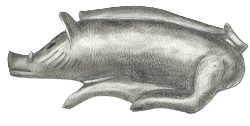
| 13 October 2026 | Lecture: Porcines in the Late Iron Age art of Sussex (c. 100BC-AD100) Presented by Dr Reb Ellis-Haken (Research Assistant, University of Gothenburg, Honorary Research Associate University of York) Since the 1980’s a number of figurines portraying porcines have been found in the Sussex region, all apparently dating from the late Iron Age or early Roman periods. With the increase in metal detecting, this pattern has continued. Yet the question remains: why are porcines so popular or important to the local population during this politically and artistically complicated period? Are we looking at a fashion choice, an object type of ritual significance, or the repeated portrayal of a totem associated with local identity? Based on results a PhD thesis completed in 2022 and new finds, this talk aims to answer these very questions and contextualise these finds at both a national and local level. |
| 8 July 2026 | Tour of the Bridge Farm Excavation at Barcombe |
| 14 April 2026 | Lecture: Fifth and sixth century burial grounds along the Sussex coast; comparisons and differences Presented by Dr Sue Harrington FSAIndependent Researcher, Honorary Senior Research Associate, UCL Institute of Archaeology The fifth and sixth century burials in West Sussex are noted for their important assemblages of glassware and Quoit Brooch Style material. For the first time illustrated grave catalogues from the nineteenth and twentieth century excavations have been assembled and are now published. |
| 10 March 2026 | Lecture: Vikings: their History, Social Interaction and Artifacts Presented by Bob TurnerWorthing Archaeological Society member and authorThe Viking era only lasted for a short period from the sacking of Lindesfarne to the defeat of Harald Hardrada in 1066 but in that time History under went many changes. This lecture tries to give a full account of lives of how Britain fared as well as how the Viking lived and their beliefs. |
| 14 February 2026 | WAS Day School: Animal Bones Part IIPresented by Sarah GreenDirector of Sussex Archaeology and History, a Practitioner of the Chartered Institute for Archaeology and co-founder of the University of Sussex Archaeological Society. Sarah has a Master’s Degree in Osteoarchaeology and has taught Animal Bones and Human Remains on a number of Adult Education courses and Day Schools.Animal bones and teeth are recovered from the majority of archaeological sites and can provide rich insights into past economies, lifeways, and the complex relationships between humans and animals. This course builds on the Introduction to Animal Bones in Archaeology one-day course, introducing new topics while further developing key identification skills. Although attendance at the previous course is not required, a basic understanding of the mammalian skeleton will be beneficial. The course begins with a recap of mammalian skeletal anatomy and identification techniques. A practical session will allow everyone to re-familiarise themselves with skeletal elements and the mammal species most commonly encountered on British archaeological sites. We will then explore methods for distinguishing between human and non-human animal bones. While complete bones are often straightforward to identify, fragmentary remains can be surprisingly challenging. A hands-on session will reinforce learning and include short case studies examining what can be inferred from small assemblages containing both human and non-human material. The course will also cover the identification of animal teeth and skulls, alongside techniques for estimating age at death in animals using tooth wear. As with the introductory course, teaching will follow a strongly practical, hands-on approach. Alongside lectures, we will work directly with archaeological bone material and are welcome to bring their own samples for discussion and identification. |
| 10 February 2026 | John Pull Lecture: Highdown Big Dig 2025: an overview of the Big Dig and update on post ex workPresented by James SainsburyArchaeologist and Archaeology Curator at Worthing Museum and Art GalleryThe Highdown Big Dig 2025 was a resounding success, both in terms of the archaeology and the levels of interest from the general public. Worthing Archaeological Society played a pivotal role in the excavation, some 80 years after Dr Wilson last led the Society to investigate this famous local landmark. Post-excavation results are beginning to come in, and this lecture will look at the Big Dig itself alongside exciting new narratives that are emerging around the history of Highdown Hill. |
| 13 January 2026 | Lecture: The Land-use History of the Southern ChalklandsPresented by Dr Michael J Allen MCIfA FLS FSA Allen Environmental Archaeology, Visiting Research Fellow in Environmental Archaeology, Bournemouth UniversityThe iconic Downs of England’s green and pleasant land provide the backdrop for many major archaeological sites in Sussex and further afield. Elsewhere in the country and NW Europe, pollen survives on archaeological sites allowing us to place the prehistoric and historic sites we dig; their landscape and land-use history. But chalky soils do not preserve pollen, so we were stuck … was chalk-land ever wooded? Over 50 years ago John Evans cracked this with microscopic land snail shells from archaeological sites (how does that work?) …. and now we are re-examining and reinterpreting with new evidence and new stories – The lecture will took us through that journey and gave examples from Wessex, Stonehenge, Hampshire, and Sussex and even our Highdown Down excavations. |
| 10 January 2026 | New Year Walk: StorringtonGuided by Sarah BrewerA walk round Storrington following one of the Horsham Heritage trails. |
| 9 December 2025 | Lecture: Sompting Malthouse Fields Presented by Connie Shirley and John Mills Connie Shirley Worthing Archaeological Society member, Sompting Excavations site director, Surveyor and Project Manager. John Mills President Worthing Archaeological Society.WAS have been excavating in Sompting Malthouse Fields since 2017. Finds indicate the main occupation is in the Medieval/Post Medieval period. This talk reviews the excavation findings and how research can shed light on the ownership and use of the site. The question we have been asking is “where’s the pub?” |
| 7 November 2025 | WAS Autumn Social Come and enjoy an evening of quizzing and skittling in the Skittle Alley at The Black Horse, High Street, Findon, BN14 0SX |
| 11 November 2025 | The Con Ainsworth Memorial Lecture: Lecture: ‘Fall In, Ghosts’: Archaeological Investigations at the site of the World War Training Camp at Cooden, East Sussex Presented by Simon Stevens University College London, Institute of Archaeology, Senior Archaeologist/Project Officer, Archaeology South-EastOpened in September 1914, Cooden Camp was used throughout the First World War. It trained the Sussex lads who were involved in The Battleof the Boar’s Head at Richebourg-I’Avoué in France on 30 June 1916, when the three battalions would suffer some 1,100 casualties. Prior to a housing development on part of the former camp, full-scale archaeological excavation between September 2024 and January 2025, revealed a variety of archaeological deposits and artefacts relating to day-to-day life at Cooden Camp. |
| 15 November 2025 | Study Day: A Practical Introduction to Animal Bones in Archaeology Presented by Sarah Green Director of the Sussex School of Archaeology An introduction, with hands on experience, to the methods of identification of animal bones from archaeological sites and how they can help us to understand the economy and way of life of people in the past.Animal bones and teeth are found on the majority of archaeological sites and can reveal an incredible amount about the economy and way of life of people in the past as well as helping us to understand the complex relationship between humans and animals.Animals formed an important part of people’s lives in the past and the bones from archaeological sites may provide information on not only diet, but also care, hygiene, climate, status, season of occupation, hunting and butchery methods, industries, trade and religion.This course will introduce students to the study of animal bones from archaeological sites and will cover basic identification skills and analytical techniques. There will be a ‘hands on’ approach so as well as lectures, there will be practical work handling archaeological bone samples.Unlike most human bones, which are often recovered from sites in an ordered and systematic manner, animal bones may be found in any kind of feature in any area of a site. They also vary greatly in size from the smallest rodents, birds or fish to the large mammals such as cattle and horse. In this course we will concentrate on the mammals recovered from British archaeological sites.We will look at the properties and development of the vertebrate skeleton and identification of skeletal elements. There will also be a consideration of the skeletal evidence for sex, age at death and pathology. Topics covered in the course:• Introduction to faunal studies in archaeology• Mammalian skeletal anatomy• Methods of identification, using reference books and a reference collection of bone• Methods of ageing and sexing• Measurement Sarah Green initially studied Ancient History and Archaeology at Manchester University. After a gap of some years, she returned to study on a part-time basis and completed a Certificate in Practical Archaeology through the adult education department at Sussex University. Postgraduate studies resulting in an MA in Classical Civilisation with the Open University and then an MA in Osteoarchaeology at the University of Southampton furthered enthusiasm. These studies then led on to the teaching of a number of adult education courses and day schools, notably in the areas of animal bones, human skeletal remains, Maritime archaeology and the Aegean Bronze Age.Sarah is a Director of Sussex Archaeology and History, a Practitioner of the Chartered Institute for Archaeology and maintains a keen interest in educational administration. She has travelled extensively around Crete investigating many of the Minoan sites on the island. She has also visited the Bronze Age Mycenaean sites in the Peloponnese on mainland Greece and ancient Troy in Turkey. She divides her time between England, Greece and Crete. |
| 25 October 2025 | Day School: Using the Geographical Information System QGIS Presented by Connie ShirleyTraining in the basics and an opportunity to apply some of the learning activities to the data sets from this years’ excavations. |
| 14 October 2025 | Lecture: Threats to our Archaeological Heritage Presented by Dr David Rudling Academic Director of the Sussex School of Archaeology. Previously David worked for 25 years for the UCL Field Archaeology Unit, before switching to the University of Sussex where he was Senior Lecturer in Archaeology (Continuing Education). David’s research interests include: Roman-period rural settlements, land-use, religion and ritual in Britain, and ancient and medieval coins. He is a Fellow of the Society of Antiquaries of London, a Member of the Chartered Institute for Archaeologists, and a Trustee of the Council for British Archaeology South-East.Our historic archaeological heritage, both above and below ground level, is a finite and valuable resource that is subject to natural and human agencies of destruction. This talk will examine some of the main threats involved, which range from climate change, coastal erosion, storm damage and tree roots, to plough damage, quarrying, building developments, road construction, warfare, tourism, illicit and unrecorded metal detecting, and even …..some archaeologists. |
19 July – 1 August 2025 | Dig: The Highdown Big Dig In conjunction with Worthing Museum, National Trust and The Headly Trust An excavation at Highdown Hill, an archaeological site of national importance, with its Bronze Age enclosure, Iron Age hill fort (built on top of the Bronze Age enclosure) Roman activity, including a bath house, and the nationally significant Anglo-Saxon/Early Medieval cemetery within the ramparts. This project was part of the Council for British Archaeology’s annual Festival of Archaeology. There was lots of free-to-attend tours and workshops during the project, suitable for children and adults alike. There was a Big Dig Open Day on Saturday 26th July, with extra activities. |
| 8 April 2025 | Lecture: Smugglers of the South EastPresented by Amie FriendMember of the WAS Field Team and founder of Time Seekers – History and Archaeology Education for Schools and MuseumsContraband. Murder. Mystery. Punishment. Step back 300 years to when the landscape of Sussex and the South East was a haven for smuggling illicit goods into small fishing towns and communities. Hear the myths and legends, as well as the real evidence we have for their far reaching criminal activities. |
| 11 March 2025 | Lecture: The Neanderthal People of the English Channel: Adaptations, Encounters and Extinctions Presented by Dr Matt Pope Archaeologist based at UCL Institute of Archaeology. Leading on excavations in Britain and the Channel Islands, he studies the Ice Age prehistory of northern Europe to understand how early human cultures pushed at the limits of their range, how adaptations underpinned our species success and the current challenges it faces. La Manche is the name we give to the Ice Age landscapes of the English Channel, southern Britain and northern France. It has a record of early human behaviour which varies from isolated and difficult-to-interpret single artefacts through to rare sites preserving deep and rich accumulations of many thousands of finds. By interpreting these traces, which include rare human remains, we are able to tell a story of Neanderthal people from their earliest origins through to their apparent extinction. In this lecture we explore this record looking at Neanderthal culture through the lens of their adaptive success and consider in what ways their interactions with Homo sapiens may have led to their disappearance. |
| 11 February 2025 | Lecture: The John Pull Memorial Lecture: The Burpham Big DigPresented by James Sainsbury Archaeologist and Archaeology Curator at Worthing Museum and Art Gallery The community excavations in Burpham parish in West Sussex focused on the excavation of test pits in the gardens of 31 properties over the period 10th – 23rd August 2024. The Big Dig project was undertaken by Worthing Archaeological Society, residents and Worthing Museum staff, along with student volunteers. The objective was to enhance our understanding of the historic development of Burpham, Wepham and Peppering. It aspired to bring these communities together and increase both local and general interest in the incredible history of the South Downs. |
| 18 January 2025 | Day School: Early and Late Post-Medieval Pottery Presented by Luke BarberThis Day School on Post-Medieval pottery picked up from where we left off after our Day School of 26th October 2024 entitled ‘Saxon and Medieval Pottery in Sussex’. Luke recapped Late Medieval pottery from the 15th to early 16th centuries. He then looked at early and late post-medieval wares and forms spanning the 16th to early 20th centuries. This period sees the rise of industrially produced wares of the18th century when Britain actually started to export wares to the Continent. As well as slides Luke will showed us reference sherds and there was practical sorting sessions. |
| 14 January 2025 | Lecture: Crete: Myth of the Minatour – Archaeology of the Minoans Presented by Sarah Green Joint director Sussex School of Archaeology and History, co-founder University of Sussex Archaeology Society, Practitioner of the Chartered Institute for Archaeology. Crete is best known in Greek Mythology as the home of King Minos, his wife Pasiphae, their daughters Ariadne and Phaedra and Pasiphae’s child, the Minotaur. But who were the Minoans and how did their civilisation, which has been described as the earliest of its kind in Europe, develop into a strong maritime entity which traded throughout the Aegean, notably on mainland Greece, and with Egypt? This lecture will look at the archaeological evidence we have for the Aegean Bronze Age civilization on the island of Crete, which flourished from about 2600 to 1100 BC and was rediscovered at the beginning of the 20th century through the work of British archaeologist Arthur Evans. |
| 10 December 2024 | Lecture: Rooted in History, Branching into the Future: The Story of the Nation’s Forests Presented by Dr Lawrence Shaw Archaeologist, Lead Historic Environment Advisor Forestry England The nation’s forests are home to some of the best archaeological sites, historic buildings and designed landscapes found in England. Evidence of how humans have shaped these places can be found frozen in time, hidden beneath the tree canopy. The unique nature of forestry, when compared to other land uses, means that our historic record has the potential to be preserved to a much higher degree, with tens of thousands of known sites, and more than 850 protected monuments, buildings and parks and gardens found throughout our forests. How the Forestry Commission developed, how we acquired land and how this has been managed over the last one hundred years, means that Forestry England now oversees a palimpsest of landscape histories, ranging from the Palaeolithic through to the Second World War, as well as our own histories. This lecture will touch on just some of the incredible archaeological and historical narratives that can be found within the Nation’s Forest and how Forestry England has influenced these. |
| 23 November 2024 | Day School: Post Medieval SussexPresented by Simon Stevens The archaeological study of the recent past has often been seen as something of a ‘poor relation’ in the discipline, but luckily times have changed. The Post- Medieval period offers a wide range of remains both buried and in standing structures, often backed-up by surviving documentary evidence. From burials to buttons and from privies to pill-boxes, there is plenty to look at in Sussex and beyond. At at Worthing Museum and Art Gallery. |
| 12 November 2024 | Con Ainsworth Memorial Lecture: Coast at Work; Continuity and ChangePresented by Dr Geoffrey Mead Associate Tutor Sussex University and Sussex Landscape expert. Geoffrey is passionate about the Sussex landscape, with a fantastic local knowledge of its geography and evolution over millions of years. ‘The coast at work’ looks at the variety and connectivity of many aspects of coastal employment along the Sussex shoreline from fishing and boat building, to hotels and holiday camps; the talk looks at aspects of the working coast past and present. |
| 8 November 2024 | WAS Autumn Social An evening of quizzing and skittling in Skittle Alley at The Black Horse,Findon |
| 26 October 2024 | Day School: Medieval PotteryPresented by Luke Barber at at Worthing Museum and Art Gallery. Luke Barber will be looking at the pottery likely to be found in Sussex in the Saxon and Medieval periods. We will be covering the period 1350 to 1500/50. The day will be split into sessions of Early, Mid, Late Saxon, Saxo-Norman, High Medieval and Late Medieval. Local wares/fabrics will always be the most common finds on excavations but non-local English and imported types that may be discovered in different periods will also be reviewed. There will be sample sherds for us to look at and some practical sorting sessions to practise grouping and dating fabrics. |
| 8 October 2024 | Lecture: The Story of Highdown Hill Presented by James Sainsbury Archaeologist and Curator of Archaeology at Worthing Museum and Art Gallery. James gave a lecture on the fascinating history of Highdown Hill. From Bronze Age enclosure and Iron Age fort through to Roman residence and Anglo-Saxon cemetery, this talk took an in-depth look at one of Worthing’s most famous hills. New and exciting research was discussed, including future plans for further study that could challenge the established history of the site forever. |
| 21 September 2024 | Guided Walk: Around Lewes WAS Walk around Lewes lead by Simon Stevens |
| 10 – 23 August 2024 | Dig: The Burpham Big Dig A joint project led by Worthing Museum to excavate 30 1m x 1m test pits at Burpham near Arundel and adjacent hamlets. Work to be undertaken in conjunction with the local community. |
| 15 July – 3 August 2024 | Dig: Sompting Malthouse/Whitehouse A dig in the SW corner of the field, and to investigate possible houses on the east side of Church Lane. Meanwhile the Research Group is finding lots of information about the area. |
| 6 July 2024 | Visit: Tour of Rocky Clump Come along and join us for a tour of Rocky Clump on Saturday 6th July. We will be shown around by John Funnell of Brighton and Hove Archaeological Society. |
| 15 June 2024 | Come and Meet Us at Worthing Museum and Art Gallery Come and meet us – and handle some of our amazing Finds from local excavations and further afield. There will be prehistoric flint tools from Palaeolithic, Neolithic and Bronze Age times, Roman pottery and much more on display. How many times have you been able to handle a Palaeolithic axe, dating back thousands of years? See the tiny blocks of tesserae the Romans used to make mosaic floors at the Walberton Villa and the different types of pottery the Romans used for cooking as well as their best Samian tableware. |
| 27 April 2024 | Petworth Park Walk – “Most interesting from an archaeological point of view” – Lead by Henry Wakefield Fascinating archaeological walk around Petworth Park lead by Henry Wakefield, a long term resident. |
| 9 April 2024 | Lecture: The Men, The Mission, The Recovery: The search for the B24 and its MIA’s Presented by Mark Phillips Local Historian and Councillor Arundel On Thursday 22 June 1944, an American B24 Consolidated Liberator of the USSAF 489 Bomber Group – nicknamed ‘Johnny Reb’ – crashed upon its return to the UK, following severe battle damage to the plane during its mission to bomb the airfield at St-Cyr, SW of Paris. I plan to tell the story of the plane, the men, the mission, the crash, the research and the project to find its two missing in action (MIA’s) and repatriate them to them to the USA. |
| 13 April 2024 | WAS Drawing Day School 3: Artefact DrawingPresented by Bob Turner This session will cover the recording and illustration of pottery, metal, wood, glass, stone, flint, leather, textiles and bone. Illustration recording is drawing ‘what you see’, so you do not need to be an artistic person to enjoy this discipline. These illustrations will form part of the final site report. Full Day, Worthing Museum |
| 12 March 2024 | Lecture: The EPIC Project at Sompting Brooks Presented by Connie Shirley and Robert Turner |
| 2 March 2024 | WAS Study Day: Photography in Archaeology Presented by Lisa Fisher Full Day, Worthing Museum |
| 24 February 2024 | WAS Drawing Day School 2: Post-Excavation Plans and Sections Presented by Bob Turner This session will take the on-site plans and section drawings created in Session 1 to a stage where they can be included in the final site report. This will include inking-in and the production of notes. |
| 13 February 2024 | John Pull Memorial Lecture: Investigating Knepp Castle: geophysical surveys at a ‘slighted’ site Presented by Dr Richard Nevell Honorary Research Fellow University of Exeter Department of Archaeology All that survives of the medieval Knepp Castle is the west wall of the keep. The rest has been lost to time and road 18th-century building. Founded by the Braose family, it was confiscated by King John who used it as a hunting lodge and stayed there several times. In 1215 and 1216, when he was at war with the barons, John twice ordered the destruction of Knepp Castle. Recent geophysical work at the castle has aimed to find out more about its layout, establish whether there are archaeological remains, and find out whether John’s orders to destroy the castle were followed. The fieldwork took place in 2021 and 2022 and suggests there is more to Knepp than meets the eye. |
| 13 January 2024 | Study Day: Medieval Towns of Sussex Presented by Simon Stevens |
| 9 January 2024 | Lecture: Recent Discoveries at the Bridge Farm Roman Settlement Presented by David Millum and Rob Wallace David Millum, co-director with Rob Wallace of the Culver Archaeological Project, gave a summary of the recent excavations of the Romano–British settlement at Bridge Farm, near Barcombe Mills. Whilst the main theme of the talk was the features and artefacts found in Trench 7 during 2018-23, they also included a brief background to the site as well as their current thoughts about how this 1st to 4th century settlement evolved and how it fitted into the wider Roman landscape of south-east Britain. Anyone who missed their previous talk to WAS in 2018 and who would like to catch up on the features and finds revealed in the six previous trenches excavated between 2013-18 will find earlier PowerPoint presentations and written summaries on the project’s website: www.culverproject.co.uk |
| 18 December 2023 | WAS Members Open Day at The Education Room, Worthing Museum10:30-16:00 hrs We would like to invite all WAS members to pop in to the Education Room at Worthing Museum at any time between 10.30 am and 4.00 pm on Saturday 18th November for tea/coffee and cake. There will be displays of some of our finds from the last couple of busy years of excavations and field walks. Join in cleaning and processing our latest finds with the Finds Team. Discuss plans for 2024 and beyond – Field work and potential Digs, Finds sessions, Lectures, Study days, Walks, Visits and so much more. |
| 12 December 2023 | Lecture: Old Atherington and the Washed-Away Coastal Villages of West Sussex Presented by John Mills, Archaeologist and President of Worthing Archaeological Society This talk looks at what we know of the historical towns, villages and hamlets of West Sussex that once existed near the sea shore, but have moved inland or disappeared entirely through the encroachments of the sea. In its second half, Worthing Archaeological Society’s fieldwork in recent years on Climping Beach will be reviewed, concentrating on the surviving remains of Old Atherington village and the use that may be made of historical mapping to understand historical features that still survive. |
| 14 November 2023 | Con Ainsworth Memorial Lecture: Cerne Abbas – Playing with Giant Ideas Presented by Dr Mike Allen, Environmental Archaeologist The Cerne Abbas Giant, aka the rude man of Dorset, proudly stands astride the chalk hill, Iron Age encampment above him and chalk downland in front of him. He is one of a number of chalk figures in southern England, only a few of which depict human figures such as our own Long Man of Wilmington. To mark a century of the National Trust ownership, their archaeologist Martin Papworth, decided to undertake limited investigation of the Schedule Monument to try and find out, once and for all, how old he was. He enlisted the help of an archaeological scientist and geoarchaeologist … and this lecture tells the story of those investigations, the date of the Giant, why he disappeared, and perhaps why he was cut in the first place. Some of which was elucidated by geoarchaeology and snails! |
| 10 October 2023 | Lecture: Early European Jewellery: from the Palaeolithic to the end of the Roman periods Presented by Dr Judie English From the Neanderthals onwards people have used objects to adorn themselves, often this jewellery is of sufficient importance to be buried as grave goods to travel with them into the afterlife. Precious, rare and beautiful materials, symbols of power, were used and skilled labour employed to provide objects for people of high status, but the urge to wear jewellery extends throughout society. This talk will look at jewellery in Europe from the Palaeolithic to the end of the Roman periods. |
| 16 September 2023 | WAS Drawing Day School 1: On-Site Plan and Section Drawing – Presented by Bob Turner This session covered the methods and standards used to record on-site. The session then went outside to put our new found knowledge into practice recording a plan and section with a pencil on Permatrace. |
| 10-28 July 2023 | WAS Malthouse Dig Sompting WAS members only. Continuing the exploration of the Malthouse Field in Sompting. |
| 24 June 2023 | WAS Site Visit to Culver Archaeology Project at Bridge Farm Bridge Farm, Barcombe Mills, Near Lewes, East Sussex, United Kingdom David Millum, Research Archaeologist from the University of Sussex has given us permission to visit the Culver Archaeological Project at Bridge Farm just north of Lewes. |
| 3 July 2023 | WAS Day School ‘An Introduction to Field Archaeology’, presented by Gill Turner and Keith Bolton At Worthing Museum Education Room Content: Introduction, Site Identification, Project Scope, Planning and Preparation, Background Research, Types of Fieldwork, Onsite, Post Excavation, Publication References and Reading List |
| 30 May 2023 | WAS Tour of Priory Park James Kenny, Chichester County Council’s Archaeologist will provide someone to give us a special talk. It is also The Novum Museum’s Roman re-enactment day, so there’ll be other events in the park that might be worth a view. |
| 13 May 2023 | WAS Day School : Prehistoric Pottery Barbara McNee Education Room, Worthing Museum 10.00 am – 4.00 pm Pottery is one of the most ubiquitous cultural materials recovered in archaeology. It is key to understanding the chronology and interpretation of burial and settlement sites, and offers much information about technology and society. This Study Day will allow us the opportunity to handle and discuss a wide range of prehistoric pots, talk about their general manufacture, fabric etc. and go through the various stages involved in recording and illustration. By the end of the day we will have an understanding of :the general concept of pottery forms and how these change throughout prehistory the classification systems used to record data how to identify and describe fabric show to describe form type show to write a professional pottery report |
| 11 April 2023 | Lecture: Recording our Past – Jane Clark, Finds Liaison Officer – Sussex PASRecording our Past Recent finds from the Portable Antiquities Scheme in Sussex. |
| 14 March 2023 | Lecture:Women in Archaeology Amie Friend, Member of the WAS Field Team and founder of Time Seekers – History and Archaeology Education for Schools and Museums Hilda Petrie and many others. |
| 14 February 2023 | John Pull Memorial Lecture:Holding out for a Nero: new work on the Roman imperial sculptures of Sussex Dr Miles Russell |
| 10 January 2023 | Lecture:Longitude Robert Turner How we learned to navigate and the losses that happened at sea. |
| 13 December 2022 | Lecture:National Trust South Downs: Past & Future James Brown, National Trust Archaeologist London & South East Region The ‘Cissbury Goes Digital’ project, also the ‘Changing Chalk’ partnership: Changing Chalk will focus on Historic England’s aerial Investigation and mapping work progress and next steps, as well as Monument Mentors that we are working on with South Downs National Park Authority and Historic England. An update with some detail on preliminary results and ways to get more involved. |
| 19 November 2022 | Con Ainsworth Memorial Lecture: The Stiances Archaeological Project Simon Stevens BA (Hons) MCIfA, Senior Archaeologist, Archaeology South-East (a division of University College London Centre for Applied Archaeology) The Stiances Archaeological Project was set up in 2010 and offers primary school children from the village of Newick in East Sussex an opportunity to take part in an archaeological dig close to home. Documentary and cartographic evidence had shown the presence of a former farm complex at the site, but enthusiastic test-pit digging by the kids and their helpers has revealed not only medieval and post-medieval material, but evidence of activity dating back as far as the Mesolithic. |
| 8 November 2022 | Day School: Aspects of Roman Sussex David Rudling This day school will explore aspects of life in Sussex during the Roman period (AD 43-410). We will examine: historical sources, the ‘Conquest’ of Claudius, the client kingdom of Togidubnus, the Flavian Palace at Fishbourne, the tribal civitas capital at Chichester, other nucleated settlements, villas, peasant farmsteads, field systems and farming, roads, industry, religion and burial practices. These topics will be considered from the perspectives of both the Romans and the native population. |
| 11 October 2022 | Lecture: Binsted Tile KilnsKeith Bolton, Chairman and Field Unit Director, Worthing Archaeological Society In 2001, WAS excavated ‘Green Field’, Church Farm, Binsted and a structure was identified. Excavations in 2005 revealed the lower portion of a tile kiln. Surface pottery and a pot found within the kiln, was of Binsted manufacture indicating dates of operation from AD1250 to 1550. |
| 7 May 2022 | Study Day: The Binstead Medieval Pottery Dr Ben Jervis, Reader in Archaeology at Cardiff UniversityEducation Room at Worthing Museum The Binsted pottery, a nationally important assemblage of medieval pottery, was excavated by WAS from the kiln sites at Binsted during the 1960s and again in 2006-7. The finds were stored in Worthing Museum. During the summers of 2018/9 members of WAS were involved recording the assemblage for analysis at Cardiff University led by Dr Ben Jervis. |
| 12 April 2022 | Lecture: Reconstructing the Anglo-Saxon and early Medieval Landscape using Place-names and maps Judie English |
| 8 March 2022 | Lecture:Romano-British Settlements Near Gumber Farm, Slindon Keith Bolton, Chair of WAS and Field Unit Director The results from the recent excavations at a Romano-British site and an interpretation of the site and its place in the landscape. |
| 8 February 2022 | The John Pull Memorial Lecture Lecture:The next 100 years of archaeology in Sussex and challenges we are all going to face Dr Matt Pope, Archaeologist and Principal Research Fellow of UCL Institute of Archaeology “The challenges we are all going to face and how important citizen archaeology through active organisations like WAS can be in meeting those challenges” |
| 11 January 2022 | *** Online Lecture *** Lecture:Old and New Discoveries on the Burpham Downs James Sainsbury, Archaeologist and Historian – Curator of Archaeology at Worthing Museum “The investigations I’ve been conducting with my group north of the village – as well as a look at older sites and finds from that area. The main focus will be on the Romano- British period.” |
| 14 December 2021 | *** Online Lecture *** Lecture: Angmering St Nicholas Excavations re-visited Amie Friend, Member of WAS Field Team and founder of Time Seekers – History and Archaeology Education for Schools and Museums |
| 13 November 2021 | Study Day Seminar: English Coins and Tokens 600-1600 AD David Rudling Education Room at Worthing Museum, half day, 9:30am-12:30pm David will talk about the development of coinage from Saxon to early post-medieval times, their design and purpose as propaganda tools as well as instruments of trade, and also the issue of private tokens and jetsons. The coins and tokens found during the WAS excavation at the Malthouse Field, Sompting, will also be inspected. |
| 9 November 2021 | The Con Ainsworth Memorial Lecture: Excavation and research in the Goodwood Area, from the Lower Palaeolithic to Post-Medieval: an update Mark Roberts, Archaeologist. Tutor for Fieldwork and Principle Research Fellow of UCL Institute of Archaeology, Honorary Fellow of West Dean College. “I would be both delighted and honoured to give the Con Ainsworth Memorial Lecture. I don’t know if you are aware of this but it was Con who started me off in archaeology whilst I was a sixth form student. I was his gardener in Goring and it was he who convinced me to start and stay in archaeology rather than pursuing a career in the armed forces. He and Ena often invited me and my team over to theirs for supper when we were working at Boxgrove during the long winters in the early part of the project; I cannot tell you how much we looked forward to these trips out.” |
| 12 October 2021 | *** Online Lecture *** Lecture: The Sompting EPIC Project – Landscape and People Connie Shirley & Bob Turner, Members of WAS Field and Finds Team In 2020, WAS were invited by OART to fieldwalk and then excavate on the EPIC site in Sompting. The EPIC project included farmland being converted to a country park and a new course established for the stream running through the area. The struck flints recovered give a clue to the landscape and how it was used in prehistory. |
| 13 April 2021 | *** Online Lecture ***Lecture:The Material Culture of Medieval Rural Households Ben Jervis University of Cardiff This talk gave an overview of the findings of the recently completed project ‘Living Standards and Material Culture in English Rural Households, 1300-1600’, which combined historical and archaeological data to investigate the possessions of non-elite households in this period. The talk revealed the diversity of objects acquired by rural households, including cooking equipment, tableware, bedding and furniture, and explored some of the factors which influenced the consumption habits of medieval households. |
| 9 March 2021 | *** Online Lecture ***Lecture: Threats to Our Heritage: defending our heritage, past, present and future Daryl Holter Sussex Heritage Community Some take our past heritage for granted; some forget it is amongst our present. We walk on it, drive through it and fly over it. To many I have met it brings belief, understanding, feeling, depth, culture and emotion. A sense of community, ownership, tradition and belonging. It is tangible, it has mystery, it is constant and priceless. When it falls victim to abuse it is all our moral responsibility to protect our past. It is our future generations that should have opportunity to rediscover experience and interpret the old and the new. We are but a custodian of a rich heritage that tells of our journey. Together describes the action needed to preserve our past. Together bonds us as a community, a group or a family. Communities are what hold us together, they watch over our heritage. |
| 9 February 2021  | *** Online Lecture ***Lecture: The SOE in WW2 and Nancy Wake Amie Friend, Archaeologist and Teacher Following the evacuation of troops from Dunkirk in 1940, England and the new Prime Minister, Winston Churchill, were facing a desperate struggle for freedom. In the light of the ever-growing threat from Nazi Germany, Churchill formed and tasked a new organisation with an extraordinary mission: To set Europe ablaze. In this lecture we follow the story of one of this shadowy organisations most enigmatic and enthusiastic members. This is the incredible story of Nancy Wake. |
| 12 January 2021 | *** Online Lecture *** Lecture: Researching the life of a bridge: Old Swan Bridge and the Arun river crossing at Pulborough, ancient and modern John Mills Archaeologist WSCC and President of Worthing Archaeological Society How do you research the history and changing life of an ordinary small local road bridge? This talk uses archaeology, topography, geology, transport and local history to study the archaeology and history of Old Swan Bridge at Pulborough, built in the 1780s. Previous bridges and river crossings on its site, from Roman Stane Street onwards, the bridge builders and rebuilders, flood and bridge authorities, and the villagers of Pulborough all come into the picture. |
| 8 December 2020 | *** Online Lecture ***Lecture: Emergence of People into the Americas Robert Turner, Archaeologist and Astronomer This is a view of the archaeology of North America and how the influx of Europeans in 1460 changed a stone age culture. Before Columbus there was no written history so the picture of North America is a mixture of racial memory and the remains the early peoples left behind.Members can view the lecture live on the WAS Facebook Group page at 7:30 pm on Tuesday 8th December and a recording will be available there subsequently. |
| 10 November 2020 | *** Online Lecture *** Lecture: Primitive Currencies and the Origins of Coinage Dr David Rudling, Academic Director of the Sussex School of Archaeology This talk began with a global review of various types of ‘primitive’/tribal currencies, such as cowrie shells in ancient China, the stone money of Yap Island, the kina shells of New Guinea, the iron kissi pennies of West Africa, and wampum beads of native North Americans. We then turned to the independent origins of coinage in China, India and Asia Minor, and the adoption of coinage in Europe. Members can view the lecture live on the WAS Facebook Group page at 7:30 pm on Tuesday 10th November and a recording will be available there subsequently. |
| 13 October 2020 | *** Online Lecture ***The Con Ainsworth Memorial Lecture: The Edburton Excavations James Sainsbury The second of our online lectures. James will talk about the ongoing excavations at Edburton. Members can view the lecture live on the WAS Facebook Group page at 7:30 pm on Tuesday 13th October and a recording will be available there subsequently. |
| 16 September 2020 | *** Online Lecture ***Understanding the Sompting Landscape Through Historic Maps Connie Shirley The first of our online lectures, and something of a trial-run. Connie will give a short presentation on changes to the landscape of the EPIC Project dig at Sompting Brooks as recorded in historical maps of the area. Members can view the lecture live on the WAS Facebook Group page at 7:30 pm on Wednesday 16th September and a recording will be available there subsequently. |
| 7 March 2020 | The Con Ainsworth Memorial Lecture: The Malthouse Fields at Sompting–Investigation of Building Remains, Connie Shirley Worthing Archaeological Society have investigated the building remains in Sompting Paddocks which may be part of a malthouse and farm complex known to be on this site in the 17th Century. Excavations have taken place over three years and a chalk-lined well and further flint walls have been found. Finds recovered include pre-historic flints and pottery from the late Neolithic to the present day. We present a review of the site in the landscape and findings to date. |
| 10 March 2020 | Half Day School: Boxgrove and the Palaeolithic of the Sussex raised beaches with Matt Pope, Senior Reseach Fellow of the Institute of Archaeology at UCL Matt specialises in prehistory, particularly the use and transportation of artefacts by early humans, the role of bifacial technology in lower Palaeolithic hunting strategies and social organisation and the geological context of middle Pleistocene human occupation on southern Britain. |
| 11 February 2020 | Lecture: Recovering (from) the past: Archaeology and Operation Nightingale, Richard Osgood, Senior Archaeologist, Defence Infrastructure Organisation Operation Nightingale started in 2011 with the aim of assisting the recovery of military personnel post operational-tours using archaeology. Since then it has worked on sites as varies as Saxon cemeteries in Wiltshire to crashed fighter planes in Sussex. This talk will draw together many of the fieldwork results, and discuss the outcomes for volunteers and heritage. |
| 22 January 2020 | The John Pull Memorial Lecture: An Archaeological Childhood in Sussex, Dr Janet Pennington Janet grew up in the post-World War II years looking at the ground – daughter of Sussex archaeologists Eric and Hilda Holden. Most of her early memories are of Sussex history, field-walking with her parents and observing, later taking part in, archaeological excavations all over Sussex. This talk takes us back to a more peaceful time with little traffic, no health and safety, and when every outing seemed to be tinged with excitement and mystery. |
| 14 January 2020 | Lecture: Recent Excavation at Blacksmiths Corner, Paul Mason, A.S.E. A talk about their recent Excavation in the fields North-West of ‘our’ Walberton Villa at Blacksmiths Corner. |
| 8 October 2019 | Lecture: Fishbourne Roman Wildlife Park: new questions from old bones Professor Naomi Sykes Over the last 20 years Fishbourne’ s animal remains have been subject to large-scale reinvestigation through a series of projects funded by the Arts and Humanities Research Council. This talk by Professor Naomi Sykes will present the results of this work, highlighting their importance for our understanding of the past but also their significance for modern international animal conservation policy. |
| 23 November 2019 | The Archaeology of Death and Commemoration – from Neolithic tombs to Commonwealth war grave cemeteries, attitudes to the deceased can be literally set in stone – Simon Stevens |
| 12 November 2019 | Lecture: The Portable Antiquities Scheme, Carolina Rangel de Lima, Finds Liaison Officer – Sussex The PAS promotes best practice by finders, landowners, archaeologists and museums in the discovery, recording and conservation of finds made by the public. Carolina is the Finds Liaison Officer for Sussex and will talk about some of the recent finds recorded in our area. She may also bring along a selection of artefacts for handling at the end of the session. |
| 8 June 2019  | A Day School on Food and Feasting with Judie English The day was held at the idyllic Downs Barn, Sompting between 10am and 4pm. We will look at food and feasting from the days of Homo Neanderthalensis to the Late Medieval/ Early Tudor period and will consider the relationships between food and social culture. ‘Feasting’ usually involves food provided in surplus and consumed wastefully. The giver both proves his wealth and status by accessing exotic ingredients and having them made into dishes which show that he has good taste and employs the best chefs, and creates a debt owed by his guests. Having demonstrated his superiority those guests either have to reciprocate in kind (or even better him) or accept public humiliation. Feasts are often part of socially important events – marriage treaties for example.’ |
| 1-15 June 2019 | Sompting Malthouse Field Dig WAS Field Unit will be returning to the Malthouse Field in Sompting.  |
| 4 May 2019 | Late Iron Age and Roman Period Pottery Day Course with Gordon Hayden , Roman Pottery Specialist The course will concentrate on the identification, production and use of pottery found in West Sussex, from the last decades of the Late Iron Age and throughout the Roman period (c. 10BC until AD410). Using presentations and handling, the most common types of pottery will be studied with the aim of differentiating between local, regional and imported pottery. |
| 9 April 2019 | Medieval Building Stones in Parish Churches of the Worthing Area – Roger Cordiner and Anthony Brook Indigenous and imported building stones have been recorded in 316 Medieval churches in Sussex, including Chichester Cathedral and a number of ruined churches where building stone is still visible. This lecture concentrates on the building stones of 55 Medieval Parish churches in the Worthing area, covering 4, 10km grid squares, which includes the area between the Rivers Arun and Adur from the coast to the southern margin of the Low Weald. |
| 12 March 2019 | Lecture: The Clandon Park Project – Tom Dommett This talk will consider the challenges of archaeological salvage, restoration and the rebuilding of The National Trust property Clandon House in Surrey after the devastating fire of 2015. Tom is the Regional Archaeologist for the National Trust and archaeological adviser for the project, which has been using a combination of excavation and advanced survey techniques to document the structure and learn more about its history and development with a view to future restoration. |
| 12 February 2019 | BHAS investigations of medieval remains in Hog Croft, Ovingdean – John Skelton Hog Croft is a pasture adjacent to the medieval Church of St Wulfran, Ovingdean. BHAS have conducted investigations in this field since the 1990s and these culminated in a four year dig from 2014 to 2017. The field is rich in archaeology and has long been thought to be the site of a Norman manorial complex. The recent excavations revealed evidence of an earlier Saxon community. As well as large amounts of pottery and bone the site has also given up some intriguing objects of special significance. |
| 6 January 2019 | WAS New Year Walk A 1.5mile walk, guided by the Worthing Heritage Tarring Trail leaflet. To finish up at a hostelry in High St., Tarring. |
| 11 December 2018 | The Construction of a Neolithic World on Orkney – Jane Russell There are almost seventy islands in the Orkney archipelago, mostly formed by rocks of the Middle Old Red Sandstone. This stone splits easily along clear bedding planes and presents little difficulty in quarrying, and has been used for building purposes for the last six thousand years on the islands, and helped in the preservation the archaeology. The talk will discuss monuments of the Neolithic period, looking at the development of the various chambered tombs, domestic settlements, and the ceremonial heartland of Orkney, including excavations at the Ness of Brodgar. |
| 13 November 2018 | Sussex Flint Mines and the early Neolithic Whitehawk Causewayed Enclosure in Brighton – Jon Sygrave Jon Sygrave is the Project Manager of Archaeology South-East (Centre for Applied Archaeology of the Institute of Archaeology at University College London). The Flint Mines in Sussex are the earliest in Britain with many of them situated within easy reach of Worthing. Jon has recently led the reassessment of the early Neolithic Whitehawk Causewayed enclosure which he will discuss along with the mines and other aspects of the Sussex Neolithic. |
28 October 2018 | Worthing Archaeological Society ‘Brenda’ Memorial Walk History of the Steyning Rifle Range with historian Justin Russell Short walk up Mouse Lane to the historic Rifle Range site. The track is rough and the ground is uneven – so suitable footwear is necessary. |
| 8 January 2019 | The Roman Army in Sussex – Edwin Wood The impact of the invasion and the lasting imprint of the military community throughout the Roman period. |
| 9 October 2018 | The Con Ainsworth Memorial Lecture: Saved by the Sea – Amie Friend How waterlogged preservation in archaeology develops our understanding of life and society in the past. For example, the thousands of perishable artefacts that were preserved and recovered from the waterlogged location of the Mary Rose are of immeasurable value as a Tudor-era time capsule. |
| 29 September 2018 | An Introduction to timber-framed buildings of the Weald, their development and dating for beginners – Jeremy Clarke of The Wealden Buildings Study Group This day-school covered terminology, the development and construction of timber-framed buildings, the basics of building recording, how to approach dating a building along with a set of useful resources. The day ended with a group practical session using site photographs and plans to try out the knowledge gained during the day and demonstrate how a building can be interpreted. |
| 30 June 2018 | Planning and section drawing training with Bob Turner at the Malthouse dig, Sompting This was a special training day led by Bob Turner on site at our Malthouse dig. The training was divided into two sections, running concurrently: one for complete beginners and the other, for those who have already done some planning and section drawing to improve their skills. Bob gave instructions on both planning and section drawing making use of the dig’s open trenches, the very best place to learn. This was an ideal opportunity for both beginners and those with some knowledge to learn in a real archaeological environment. |
| 14 April 2018 | Study Day: West Sussex landscapes and geology for the Archaeologist – Matt Pope Dr Matt Pope is Principal Research Associate and Senior Teaching Fellow in Palaeolithic Archaeology at U.C.L.This is a Minibus Day Tour. |
| 10 April 2018 | Lecture: The Science of a Middle Bronze Age Hord – Dr Jaime Kaminski In March 2011 a spectacular Middle Bronze Age hoard was discovered by a metal detectorist on land belonging to the Glynde Estate ‘Near Lewes’, East Sussex. Comprising nearly eighty artefacts and artefact fragments the hoard has recently been subject to scientific analysis. This presentation will consider what the analyses tell us about the production of the artefacts in the hoard and the implications for Bronze Age craft production |
| 13 March 2018 | AGM followed by Lecture: Source to Sea – the River Adur – Dr Geoff Mead ‘Adur: Source to Sea’ takes a visual journey from the sources of the river in central Sussex, through the broad plains of the Wealden clays and sands before heading south through the Downs and on to the Coastal Plain of West Sussex, ending its journey at the current river mouth. This talk looks at the geology, geography and history of this small but fascinating watercourse. |
| 30 March 2018 | Study day: Ice Age in Europe – Matt Pope Dr Matt Pope FSA MCIfA, Principal Research Associate and Senior Teaching Fellow in Palaeolithic Archaeology at U.C.L. The record of human occupation in Europe now extends well beyond a million years and involves multiple species of humans in apparently successive waves of colonisation, from the Near East, Africa and Asia. Europe has always presented challenges to early humans, forested in warm periods and intensely cold and seasonal in the cold ‘glacial stages’ it required adaptation by species initially more suited to open and lightly forested tropical grasslands. In this day course we’ll cover the archaeological record of successive human species: Homo antecessor, Home heidelbergensis, Homo neanderthalensis and Homo sapiens. We’ll explore the evidence for changes in behaviour including hunting, use of fire, processing organic materials and consider how the British record differs from that of other continental regions. The course will familiarise you with basic concept about climate and environmental change, stone age technology and latest theories surrounding human evolution. |
| 17-25 February 2018 | Fieldwalk: Fittleworth WAS members have the opportunity to take part in a joint fieldwalk near Fittleworth, West Sussex with Chichester & District AS. The field has so far produced a number of good quality Mesolithic and Neolithic flintwork.This is scheduled to start on Saturday, 17thFebruary and continue through to Sunday, 25th February, which is likely to be a much greater window than needed. With a good number of walkers and reasonable weather it should be completed in a few days but it does mean that days can be cancelled if the weather is dire. |
| 13 February 2018 | Lecture: Bridge Farm 2011 to 2017 – Rob Wallace and David Millum The directors of the Culver Archaeological Project, will give a summary of their excavations of the Romano–British settlement at Bridge Farm, near Barcombe Mills, discovered in 2011 during a geophysical survey for Margary’s London-Lewes road. They will include a brief background to CAP as well and some initial thoughts about how this 1st to 4th century settlement fits into the wider context of south-east Britain in the Roman period and why it qualified for earthwork defences during the late 2nd century. The talk will cover the first 7 years of what looks destined to be a very long and regionally important investigation. |
| 9 January 2018 | John Pull Lecture: The First Brexit How Britain became an island and its effect on Neanderthals, Mesolithic and Neolithic Man – Robert Turner Over the past 460,000 years Britain has been separated from Europe several times with the final split in 6,200 BC when the disaster of Dogger Land had a great effect into the Mesolithic peoples of that time. Recent discoveries by Imperial College London, operating from Littlehampton, have now been able to draw a picture of “what leaving Europe” meant in times past. |
| 12 December 2017 | Lecture: The life of a common soldier in the English Civil War – Nigel Rumble The clothes, weapons and accoutrements used by a soldier in England in the 1640’s in his daily life. I will also briefly cover the make up of the armies and talk a very small amount about battle tactics. The talk will be illustrated with (mostly) reproduction clothing and equipment and explanations of their use; there will be an opportunity at the end to examine these items more closely. |
| 25 November 2017 | Half day school: Place-names and Archaeology in Sussex – Judie English Judie will discuss Place-names in the Landscape and how they were derived. |
| 14 November 2017 | Lecture: Evidence for Saxons in post-Roman Sussex – James Sainsbury Archaeology is the key driver in uncovering evidence for Germanic settlement in Sussex during the decline of the Western Roman Empire. The historical documents are few and unreliable, though arguably should not be dismissed outright. This talk will look at some key 5th and 6th century Saxon burial and settlement sites in the county, along with documents, chance finds and new genetic research in an attempt to piece together the birth of the kingdom of Sussex. James will be bringing some finds from the Highdown Cemetery for handling after his talk. |
| 15 October 2017 | Walk: around historic Littlehampton with Cheryl Hutchins A 1.5 hour easy walk around historic Littlehampton. |
| 10 October 2017 | Lecture: Iron Age Memory vs. Roman Metaphor; re-reading the archaeology of a Client Kingdom – Gordon Hayden What was the immediate impact of the Roman Conquest in Hampshire and West Sussex? The lecture will highlight some continuation of Iron Age traditions and how they interplayed with incoming ideas and practices. It will also propose an alternative hypothesis as to why Fishbourne Palace was built. |
| 30 September 2017 | Study day: led by David McOmish: ” Making Sense of Monuments: Landscape Archaeology of Sussex: The Bronze Age” David McOmish, a Senior Archaeological Investigator with English Heritage and a leading British Prehistorian, has, among numerous other achievements, made several large scale landscape studies of the South Downs. Some of you may remember last year he gave us a wonderful study day which took us up to the end of the Neolithic. This day is likely to prove just as popular. |
| 5-17 August 2017 | Summer Dig: Rough Copse Our Summer dig will be from Saturday August 5th to Thursday August 17th inclusive. This time we are going to look at an area in Rough Copse, West of Goblestubbs which showed up on the Lidar. Setting up/Surveying will take place on August 3rd & 4th, and Recording/Planning/closing the site on August 16th and 17th. |
| 17 June 2017 | Day School: Flint Knapping with Bob Turner This will be held in the beautiful venue of Downs Barn, Sompting. Bob will tell us about the uses of flint tools in prehistory and demonstrate how to make them, followed by practical sessions where we can try to make our own. |
| 14 May 2017 | WAS Walk: To commemorate Con Ainsworth on what would have been his hundredth birthday The George, Burpham. |
| 11 April 2017 | Lecture: Two Ancient Cities: Archaeology at Butrint and Gjirokastra in Albania – Oliver Gilkes |
| 18-26 March 2017 | Excavation by WAS Slindon Field 20 |
| 14 March 2017 | Lecture: Why Stonehenge is Where it is – Mike Allen |
| 11 March 2017 | WAS Study Day: The Archaeology of the Roman Military Led by Edwin Wood, Sussex Finds Liaison Officer Education Room, Worthing Museum |
| 14 February 2017 | Lecture: A Look Back at WAS Field Activities – Keith Bolton Worthing Library Lecture Theatre |
| 2 January 2017 | New Years’ walk and pub lunch – High Salvington to the Gun Inn, Findon. |
| 13 December 2016 | Lecture: What does land organisation tell us about social change in late prehistoric Sussex? – Judie English |
| 26 November 2016 | Lecture: Bronze Age Worthing – Barrows, Beakers and Hoards |
| 22 November 2016 | Day School: Medieval pottery – Duncan Brown Education room, Worthing museum |